In the last Rhythm in Poetry lesson, we talked about the “iamb,” a two-syllable poetic foot with the stress on the second syllable. The reverse of the iamb is called the “trochee” (pronounced TRO-kee). Like the iamb, the trochee is a two-syllable foot. But instead of being stressed on the second syllable, trochees are stressed on the first syllable. For example, the word “today” is an iamb because we emphasize the “day” not the “to.” (That is, we say “to-DAY,” not ‘TO-day.”) But the word “candy” is a trochee, because we emphasize the “can” and not the “dy.” (It’s pronounced “CAN-dee,” not “can-DEE.”) Look at it like this:
A capital ship for an ocean trip Was The Walloping Window-blind
No gale that blew dismayed her crew Or troubled the captain’s mind.
The man at the wheel was taught to feel Contempt for the wildest blow,
And it often appeared, when the weather had cleared, That he’d been in his bunk below.
The boatswain’s mate was very sedate, Yet fond of amusement, too;
And he played hop-scotch with the starboard watch, While the captain tickled the crew.
And the gunner we had was apparently mad, For he sat on the after-rail,
And fired salutes with the captain’s boots, In the teeth of the booming gale.
The captain sat in a commodore’s hat And dined, in a royal way,
On toasted pigs and pickles and figs And gummery bread, each day.
But the cook was Dutch, and behaved as such; For the food that he gave the crew
Was a number of tons of hot-cross buns, Chopped up with sugar and glue.
And we all felt ill as mariners will, On a diet that’s cheap and rude;
And we shivered and shook as we dipped the cook In a tub of his gluesome food.
Then nautical pride we laid aside, And we cast the vessel ashore
On the Gulliby Isles, where the Poohpooh smiles, And the Anagazanders roar.
Composed of sand was that favored land, And trimmed with cinnamon straws;
And pink and blue was the pleasing hue Of the Tickletoeteaser’s claws.
And we sat on the edge of a sandy ledge And shot at the whistling bee;
And the Binnacle-bats wore water-proof hats As they danced in the sounding sea.
On rubagub bark, from dawn to dark, We fed, till we all had grown
Uncommonly shrunk,–when a Chinese junk Came by from the torriby zone.
She was stubby and square, but we didn’t much care, And we cheerily put to sea;
And we left the crew of the junk to chew The bark of the rubagub tree.
If you ever find yourself writing a poem that involves food, especially a list poem, you may find it helpful to have a list of foods that rhyme with one another. Here are some common ones that you could use:
Your world is shaped by the information you take in through your senses. You know which ice cream you like best because of your taste buds. You know that you shouldn’t touch the stove top because of your sense of touch. The sirens warn you to get out of the way! And most importantly, your sense of smell keeps you away from the toxic stench emanating from the facilities after your brother spends an hour “resting!”
But what if you couldn’t trust those senses anymore? That’s exactly what happens in the following poem, where the character’s senses turn up all backward. Imagine describing the spray of a skunk as delightful, and the smell of a rose as hideous. People would think you were crazy! Do you think this poem is a bit crazy?
Poetry has a lot of terms with special meanings. This poetry dictionary for kids lists the most common poetic terms that kids might encounter, along with their definitions. If you need a more extensive poetry dictionary, I recommend the Poetry Foundation’s Glossary of Poetic Terms.
A
Accent
The emphasis placed on some syllables in words more than others. For example, the word “apple” has two syllables, and the accent is on the first syllable, so it is pronounced “AP-pull.” “Banana,” on the other hand, has three syllables, with the accent on the second syllable, so it is pronounced “buh-NA-nuh.”
Anagram
A word or phrase created by rearranging the letters of another word or phrase. For example, “notes” is an anagram of “stone.” See the poem Anna Graham for many more examples of anagrams.
Antonym
A word that has the opposite meaning of another word. For example, “dark” is an antonym of “light.” See also Synonym.
Assonance Repeating the vowel sounds in the stressed, or accented, syllables in nearby words. For example, in the phrase “flying kites” the repeated long “i” sounds are assonant. See Alliteration and Assonance Lesson Plan.
B
Ballad
A form of poetry, usually suitable for singing, that tells a story in stanzas of two or four lines, and often has a refrain.
Concrete Poem
A poem in which the meaning is conveyed by the placement and design of the words on the page instead of, or in addition to, the usual arrangement of words. Also sometimes called a “shape poem” or “visual poem.” See How to Write a Concrete or “Shape” Poem.
Consonance
The repetition of consonant sounds within nearby words, especially the consonant sounds at the ends of words, as in “a stroke of luck” or “a bite to eat.”
Couplet
Two lines of poetry, one after the other, that rhyme and are of the same length and rhythm. For example, “I do not like green eggs and ham. / I do not like them Sam I Am.”
D
Double Rhyme A rhyme where the stress is on the second-to-last syllable of the words, and the end sounds are the same, starting with the vowel of the stressed syllables. Some examples are batter / fatter, ocean / lotion, and camping / stamping. Double rhymes and triple rhymes are also called “feminine rhymes.” See How to Rhyme.
Epitaph
A short poem written about someone who has died, often inscribed on the headstone of their grave. Epitaphs usually praise the person, and are sometimes humorous. See How to Write a Funny Epitaph Poem.
Foot
In poetry, a group of two or more syllables, one of which is stressed. Metrical poems are often written in feet with the same number of syllables with the stress in the same place in each foot. For example, the line “My puppy punched me in the eye” is made up of four feet, each with the stress on the second syllable, as in “my PUP | py PUNCHED | me IN | the EYE.” The most common poetic feet are two or three syllables long. See Rhythm in Poetry – The Basics.
Forced Rhyme
Most commonly, an end rhyme where the lines are written in an unnatural manner in order to “force” the words to rhyme. A forced rhyme may also be a near rhyme, wrenched rhyme, or a line where irrelevant or unnecessary information is added to the poem for the sake of making lines rhyme. See Forced Rhymes and How to Avoid Them.
Form
A “type” of poem, written by following a set of rules such as the number of lines or syllables, the placement of rhymes, etc.. Common poetic forms include acrostic, cinquain, free verse, haiku, etc. See Poetry Lessons for Kids to learn how to write many different poetic forms.
Haiku
A short, unrhymed Japanese poetic form with three lines of five syllables, seven syllables, and five syllables. See How to Write a Haiku.
Homonym
A word that has the same spelling and sound as another word, but a different meaning. For example “fine” (an adjective meaning nice) and “fine” (a noun meaning money you have to pay as a punishment) are homonyms.
Homophone
A word that has the same sound as another word, but a different spelling and meaning. For example, “there,” “their,” and “they’re” are homphones.
Hyperbole
Pronounced “hi-PER-buh-lee.” A extreme and obvious exaggeration, not meant to be believed or taken literally. For example, “he has a million-dollar smile” or “this test is taking forever.” See How to Write an Exaggeration Poem.
I
Imagery Language and poetic techniques used to appeal to the reader’s senses (sight, sound, smell, etc.) to create mental pictures and cause emotions in the reader. See also Onomatopoeia.
Internal Rhyme Rhymes within a line of poetry. For example, the poem My Pet Germs contains an internal rhyme on the third line of each stanza.
L
Light Verse
Poetry that is intended to be humorous, amusing, or entertaining. While there is some light verse written in free verse, most light verse is written in rhyme and meter. There are also many light-verse poetic forms, such as limericks, clerihews, double-dactyls, etc.
Line
A single row of words in a poem. For example, a limerick has five lines, while a haiku has three lines. Lines are one of the main things that distinguish poetry from prose.
Metaphor
A figure of speech, where a thing is described as being something else in order to suggest a similarity between the two. For example, “The cat was a rag doll in my arms” or “Nature wore its winter robe.”
Nonsense Poem
A form of light verse, usually rhymed and metrical, often with strange characters, fantastic or impossible situations, and made-up words. Lewis Carroll’s Jabberwocky and Edward Lear’s The Owl and the Pussycat are famous examples of nonsense poetry.
Occasional Poem
A poem written to commemorate a specific occasion or event, such as a birthday, wedding, funeral, anniversary, graduation, military victory, etc.
Palindrome
A word or phrase that is spelled the same backward as it is forward, ignoring spaces, capitalization, and punctuation, such as “Bob,” “mom,” “radar,” “race car,” “madam, I’m Adam,” etc.
Parody
A poem written in the style of another poem, usually humorous. Parodies usually assume the reader is familiar with the original work. For example, the poem “Let Me Out of the Classroom” by Kenn Nesbitt is a parody of the song “Take Me Out to the Ball Game.”
Perfect Rhyme
Two words that have exactly the same vowel and consonant sounds at the ends, starting with the first vowel of the last stressedsyllable. For example, green/bean, dummy/tummy, and cavity/gravity are all perfect rhymes. Note that the first consonant sound of the last stressed syllable must be different. For example leaf/belief is not a perfect rhyme because the final stressed syllable of each word begins with the same consonant “l” sound. See also: Near Rhyme, Assonance, and Consonance.
Personification
Giving human characteristics to non-human things, such as animals, inanimate objects, or ideas. For example, “The sun smiled down on the beach” or, “The trees waved at the birds flying by.”
Poem
A written composition, often using rhythm, rhyme, metaphor, and other such artistic techniques to express an idea, feelings, or a story.
Prose
Ordinary writing or spoken language, usually written in sentences and paragraphs, as opposed to rhythmical lines.
Pun
A “play on words,” usually using homophones or homonyms, where a word or phrase has multiple meanings. For example, “Six was afraid of Seven because Seven ate Nine.” This is a pun because the word “ate” sounds like “eight.”
Rhyme Scheme
The pattern of end rhymes in a poem, written out as letters, such as AABB or ABAB. See Rhyme Schemes Lesson Plan to learn how to write the rhyme scheme of a poem.
Rhythm
The sound and feel created by the pattern of accented and unaccented syllables, usually repeated, in a poem. See also Meter.
S
Sight Rhyme
Words that end with the same letters, but not the same sound, such as rough / cough / plough or prove / love / grove.
Simile
A comparison between to unlike things, usually using “like,” “as,” or “than.” For example, “his imagination was like a bird in flight.”
Single Rhyme
A rhyme in which the stress is on the final syllable of the words, such as cat / hat, and play / away. Also called a “masculine rhyme.” See How to Rhyme.
Stanza
A group of lines in a poem, separated by space from other stanzas, much like a paragraph in prose.
Subject
The main idea of a poem, or what the poem is about. For example, Basketball Is Lots of Fun is a poem about basketball, so basketball is the subject.
Syllable
A part of a word, usually a vowel and it’s surrounding consonants, that makes a single sound when spoken. All words have at least one syllable. For example, cat, I, and would are all one syllable long because they are spoken with a single movement of the mouth. Cattle, eyeball, and wouldn’t are all two syllables because they require two separate sounds to be spoken.
Synonym
A word that has the same, or nearly the same, meaning as another word. See also Antonym.
T
Tanka
A 5-line, 31-syllable unrhymed traditional Japanese poetic form, with five syllables on the first and third lines, and seven syllables on the second, fourth, and fifth lines. See also How to Write a Tanka Poem.
Tercet
A group of three lines that rhyme with one another, or are connected to another tercet by their rhyme scheme.
Theme
The main idea or point of a poem. The theme is different than the subject or topic of the poem. The subject is what the poem is about, while the theme is what the poem means. For example, in the poem “We Ate all the Cheetos,” the subject of the poem is eating tasty foods, but the theme of the poem is that it can be hard to eat healthy foods.
Triple Rhyme
A rhyme in which the third-to-last syllable in the words final stressed syllable. For example, cavity / gravity, hammering / stammering, and nobility / agility are all triple rhymes. Double rhymes and triple rhymes are also called “feminine rhymes.” See How to Rhyme.
Wrenched Rhyme Rhyming the final syllables of two words, where one is stressed and the other is not. For example the words “sing” and “morning” are a wrenched rhyme because “sing” is stressed on the final (and only) syllable, but “morning” is stressed on the second-to-last syllable. Other examples include tin/imagine, frog/catalog, etc. See also Perfect Rhyme and Forced Rhymes and How to Avoid Them.
Kenn Nesbitt, former U.S. Children's Poet Laureate, is celebrated for blending humor and heart in his poetry for children. Known for books such as "My Cat Knows Karate" and "Revenge of the Lunch Ladies," he captivates young readers globally.
These are not the only list poems, though. Many children’s poets have written fun list poems, and you can even write your own. This lesson will show you how.
The structure of a list poem
List poems usually have a list in the middle, plus a few lines at the beginning and a few lines at the end. You can think of the beginning and end of a list poem like the top and bottom slices of bread in a sandwich. The list is like the meat or peanut butter or whatever else is between the bread. Picture it like this:
Beginning
List
List
List
List
Ending
List poems often rhyme, and they are usually funny. If you look at poems like Shel Silverstein’s “Sick” or Jack Prelutsky’s “Bleezer’s Ice Cream” you will notice that the lists also include very unusual items. Putting strange, unexpected, or exaggerated things on your list is a good way to make your poem funny.
Getting started
Here are two easy ways to start writing a list poem:
Start with someone else’s beginning and end, but make your own list in the middle.
Start by writing a list of your own, and then write your own beginning and end to go with the list.
You can decide for yourself whether it will be easier to write your own list poem from scratch, or to use someone else’s poem as a starting point.
Starting with someone else’s poem
It’s okay to use someone else’s list poem as the starting point for your own poem. (Just be sure to say your creation was “Based on…” the poem you used.) For example, here is my poem “That Explains It!”:
That Explains It!
I went to the doctor. He x-rayed my head.
He stared for a moment and here’s what he said.
“It looks like you’ve got a banana in there,
an apple, an orange, a peach, and a pear.
I also see something that looks like a shoe, a plate of spaghetti, some fake doggy doo, an airplane, an arrow, a barrel, a chair, a salmon, a camera, some old underwear, a penny, a pickle, a pencil, a pen, a hairy canary, a hammer, a hen, a whistle, a thistle, a missile, a duck, an icicle, bicycle, tricycle, truck.
with all of the junk that you have in your head
it’s kind of amazing you got out of bed.
The good news, at least, is you shouldn’t feel pain.
From what I can see here you don’t have a brain.”
Notice that this poem begins with the four lines that set up the story, and ends with four lines that make it even funnier. You can use the same beginning and end, if you like, while putting your own list in the middle.
For example, what would the doctor find in your head? Since this list has rhymes at the end of each line, you can start with a few rhymes, like this:
house
mouse
cat
hat
Once you’ve got a few rhymes, you can add as many items as you want, like this:
“I also see something that looks like a house,
a monkey, a meerkat, a mink, and a mouse,
a laptop computer, a boat, and a cat,
an old pair of glasses, a coat, and a hat,
Of course, you don’t have to use my poem; you can use any list poem you like to create your own new list poem, or you can even create one from scratch.
Starting with your own list
If you prefer to write your own list poem from scratch, one easy way is to figure out what you’re going to make a list of. For example, you could make a grocery list, a list of things in your backpack, a list of your favorite sweets, a list of things you want for Christmas, and so on.
Let’s try it with a list of sweets. First let’s try to think of candies and sweets that rhyme.
Now that you’ve got some rhymes, put them into a list, adding a few more items to make the lines each about the same length:
A half a dozen Nestle’s Crunch.
A gallon of Hawaiian Punch.
Some Cracker Jacks. A box of Dots.
Some Pop Rocks and a jar of Zotz.
Reese’s Pieces. Tootsie Pops.
Hershey Kisses. Lemon drops.
Candy Corn, Milk Duds, and Whoppers.
Skittles, Snickers, and Gobstoppers.
Once your rhyming list is done, give it a beginning, an end, and a title and you’re all done.
My Shopping List
My mother said, “Go buy some bread,”
but this is what I got instead.
A half a dozen Nestle’s Crunch.
A gallon of Hawaiian Punch.
Some Cracker Jacks. A box of Dots.
Some Pop Rocks and a jar of Zotz.
Reese’s Pieces. Tootsie Pops.
Hershey Kisses. Lemon drops.
Candy Corn, Milk Duds, and Whoppers.
Skittles, Snickers, and Gobstoppers. When mother needs things from the store
She never sends me anymore.
And that’s all there is to it. Now it’s your turn. Make a list of animals, friends, monsters, games, foods, places you’d like to go on vacation, or anything else you like, and see if you can turn it into a funny list poem of your own!
Kenn Nesbitt, former U.S. Children's Poet Laureate, is celebrated for blending humor and heart in his poetry for children. Known for books such as "My Cat Knows Karate" and "Revenge of the Lunch Ladies," he captivates young readers globally.
I went to the doctor. He x-rayed my head.
He stared for a moment and here’s what he said.
“It looks like you’ve got a banana in there,
an apple, an orange, a peach, and a pear.
I also see something that looks like a shoe,
a plate of spaghetti, some fake doggy doo,
an airplane, an arrow, a barrel, a chair,
a salmon, a camera, some old underwear,
a penny, a pickle, a pencil, a pen,
a hairy canary, a hammer, a hen,
a whistle, a thistle, a missile, a duck,
an icicle, bicycle, tricycle, truck.
With all of the junk that you have in your head
it’s kind of amazing you got out of bed.
The good news, at least, is you shouldn’t feel pain.
From what I can see here you don’t have a brain.”
To provide the best experiences, we use technologies like cookies to store and/or access device information. Consenting to these technologies will allow us to process data such as browsing behavior or unique IDs on this site. Not consenting or withdrawing consent, may adversely affect certain features and functions.
Functional
Always active
The technical storage or access is strictly necessary for the legitimate purpose of enabling the use of a specific service explicitly requested by the subscriber or user, or for the sole purpose of carrying out the transmission of a communication over an electronic communications network.
Preferences
The technical storage or access is necessary for the legitimate purpose of storing preferences that are not requested by the subscriber or user.
Statistics
The technical storage or access that is used exclusively for statistical purposes.The technical storage or access that is used exclusively for anonymous statistical purposes. Without a subpoena, voluntary compliance on the part of your Internet Service Provider, or additional records from a third party, information stored or retrieved for this purpose alone cannot usually be used to identify you.
Marketing
The technical storage or access is required to create user profiles to send advertising, or to track the user on a website or across several websites for similar marketing purposes.

 What a Ham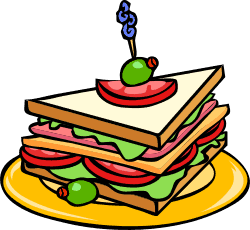
 If I Had a Dollar
 The Walloping Window-Blind


 That Explains It!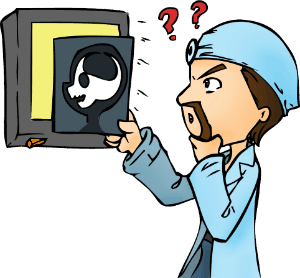
 Traditional Christmas