Kenn Nesbitt, former U.S. Children's Poet Laureate, is celebrated for blending humor and heart in his poetry for children. Known for books such as "My Cat Knows Karate" and "Revenge of the Lunch Ladies," he captivates young readers globally.
The winter holidays can be a fun and exciting time for both kids and adults. This year, why not integrate poetry into your family’s celebrations of the season? Add literary flair to your family’s traditions by including poems in your festivities.
Here are three simple ways to incorporate poetry into your seasonal celebrations.
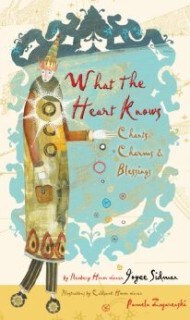
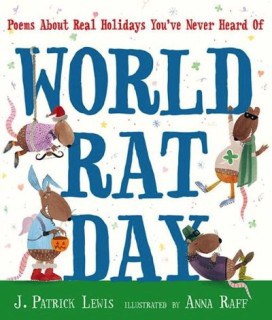
As Children’s Poet Laureate, one of my jobs is to select a collection of poetry each month to feature on the Poetry Foundation’s website. There you’ll find my monthly book picks, and those of the previous Children’s Poets Laureate.
Chances are, your Thanksgiving celebration usually includes a turkey dinner with all the trimmings, and perhaps a chance for each family member to say what he or she is grateful for. But this year you can add a new and fun twist to your family’s Thanksgiving tradition by giving poetry a place in the festivities. Reading a poem aloud is an engaging way to bring attention to what is most sacred and special about this holiday.
Here are four Thanksgiving poems that are wonderful to read out loud, either in unison (all voices together) or by taking turns reading each verse.
“Over the River and Through the Wood” by Lydia Maria Child
If this Thanksgiving poem sounds familiar, it’s probably because a version of it has been set to music. In the song version, some of the lyrics are about Christmas rather than Thanksgiving. Here is an excerpt from the original poem:
This week I posted some “Grave Humor” on the Poems page. These are epitaphs that might cause you to laugh if you found them on headstones in a cemetery. But if you are looking for more spooky/funny poems to read or share this year, here are a handful of other poems I wrote especially for Halloween.
When poets write rhyming, metrical poems, they usually count “feet” instead of syllables. A foot is a group of syllables that, most of the time, contains a single stressed syllable. (Read Rhythm in Poetry – The Basics, and You Can Scan, Man for more information about stressed syllables and poetic feet.)
Meet the Iamb
The most common poetic foot in the English language is known as the “iamb.” An iamb is two syllables, where the first syllable is unstressed and the second syllable is stressed. For example, the word “today” is an iamb because the stress falls on the second syllable, like this:
- /
today
When a poems is written using iambs, we say that it is “iambic.” For example, the following line is iambic.
As I explained in Rhythm in Poetry – The Basics, some syllables in English are “stressed” – pronounced louder or with more emphasis than others – while other syllables are “unstressed,” meaning they are not emphasized. Knowing this, you can create patterns of stressed and unstressed syllables in your writing to create a rhythm in the words. Having rhythms in your poems make them more fun to recite and easier to remember.
To make it easy to spot the stressed and unstressed syllables in the examples I gave, I wrote them in UPPERCASE and lowercase letters, like this:
my PUPpy PUNCHED me IN the EYE.
The trouble with using this method is that it is awkward to write or type this way, and it makes the poem more difficult to read. Also, if you have a poem that is already printed on paper, you wouldn’t want to have to rewrite the entire thing just to show the rhythm.
Wouldn’t it be better if could make marks to show the stressed and unstressed syllables? Indeed, there is such a system that is commonly used, and it’s called “scansion” (pronounced “scan-shun”). The process of marking the stressed and unstressed syllables in a poem is called “scanning.”
I thought you might like to know that I’ve started putting printable poetry activity worksheets for some of my poems on the website. You’ll find them on the Poetry Activities page under the heading “Worksheets.”
You can use these worksheets at home or in class to give kids a few more fun activities to do beyond just reading the poems. By answering questions, writing, and even unscrambling words, kids will get a little more practice to help improve their comprehension and literacy.
A huge thank you to Primary Leap for creating a number of these wonderful activity worksheets! Visit their website for thousands more printable activity worksheets for kids organized by grade level and subject.
Here are direct links to the activity worksheets I’ve posted so far. Enjoy!
When you read rhyming poetry, one of the things you might notice is how the words often have a nice rhythmical quality. That is, there is a pattern to the rhythm of the words that makes them fun to say and easy to remember. Sometimes the rhythm is a simple one, and sometimes it’s more complex, but it’s not there by accident. Poets arrange their words in such a way as to create those rhythmical patterns.
When rhyming poems also have a rhythm in the words, they are much more fun to read. By contrast, rhyming poems that do not have a rhythm are usually not as enjoyable to read.
Over the next several lessons, I’m going to show you how to identify the rhythms in poems and how to write rhythmical poems of your own so that others will enjoy reading them.
To provide the best experiences, we use technologies like cookies to store and/or access device information. Consenting to these technologies will allow us to process data such as browsing behavior or unique IDs on this site. Not consenting or withdrawing consent, may adversely affect certain features and functions.
Functional
Always active
The technical storage or access is strictly necessary for the legitimate purpose of enabling the use of a specific service explicitly requested by the subscriber or user, or for the sole purpose of carrying out the transmission of a communication over an electronic communications network.
Preferences
The technical storage or access is necessary for the legitimate purpose of storing preferences that are not requested by the subscriber or user.
Statistics
The technical storage or access that is used exclusively for statistical purposes.The technical storage or access that is used exclusively for anonymous statistical purposes. Without a subpoena, voluntary compliance on the part of your Internet Service Provider, or additional records from a third party, information stored or retrieved for this purpose alone cannot usually be used to identify you.
Marketing
The technical storage or access is required to create user profiles to send advertising, or to track the user on a website or across several websites for similar marketing purposes.