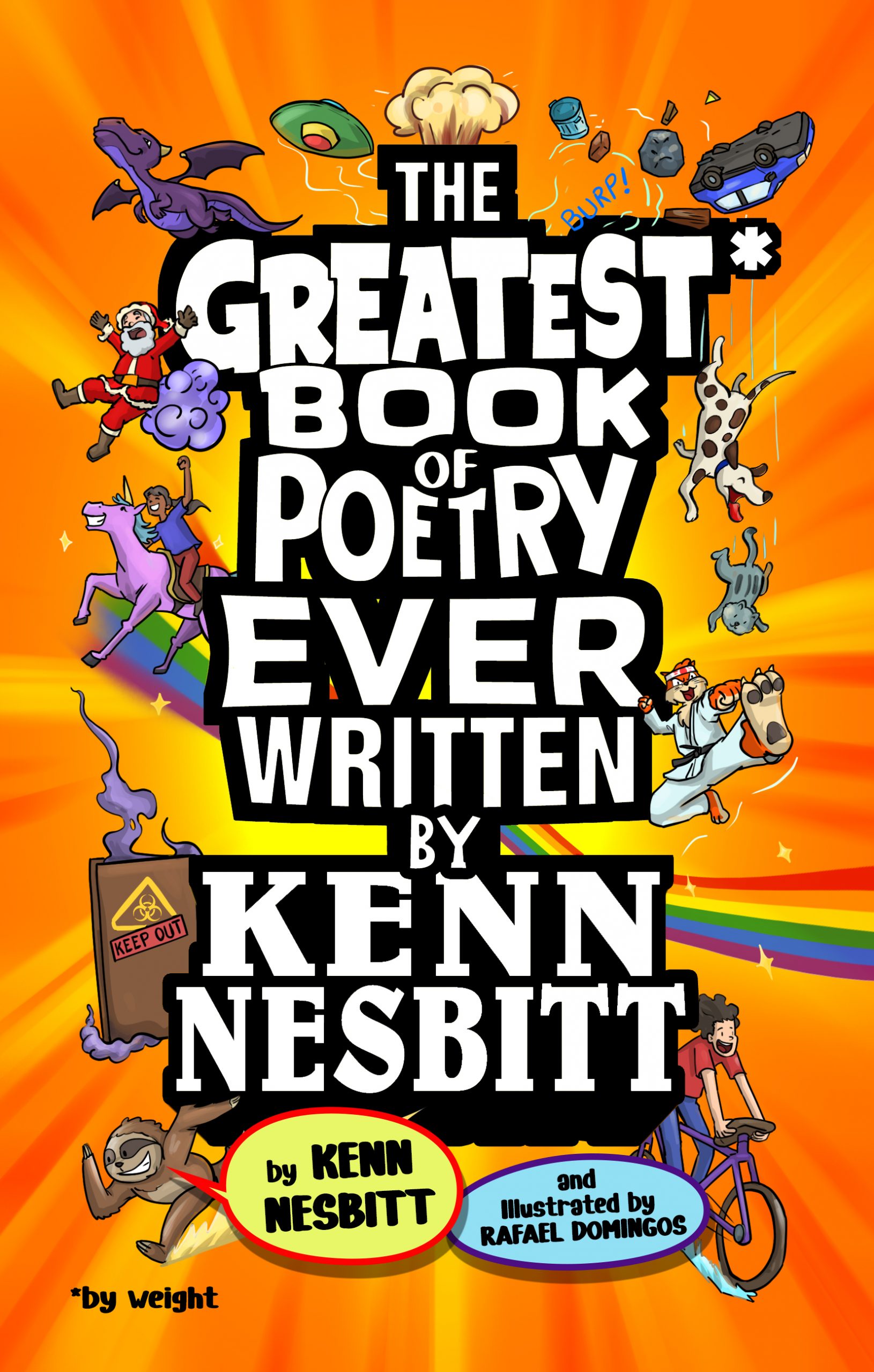
Kenn Nesbitt, former U.S. Children's Poet Laureate, is celebrated for blending humor and heart in his poetry for children. Known for books such as "My Cat Knows Karate" and "Revenge of the Lunch Ladies," he captivates young readers globally.
I recently had a “half birthday,” which falls in August since my real birthday is in February. Because of this, I was thinking about writing a half-birthday poem. By the time I started working on it, it was already September. The line “I never can remember if my birthday’s in September” popped into my head because September rhymes so nicely with “remember”—and also with December and November. I liked the way that line sounded, so I created this poem with that idea as the starting point.
When thinking about half birthdays, it also occurred to me that since it might be fun to celebrate your birthday twice a year, it could be even more fun to celebrate it three or four times a year, or even more often.
Oh, and by the way, the rhythm of this poem is the same as one of my all-time favorite poems, “In Praise of Llamas” by Arthur Guiterman. It was fun to use that familiar rhythm to explore the idea of never quite remembering my birthday—and deciding how often to celebrate it!
When’s My Birthday?
I never can remember
if my birthday’s in September
or in January, August, or July.
Or it could be in December,
or October, or November.
I’ve forgotten when it is.
I don’t know why.
And it may be on the seventh,
or the third, or the eleventh,
though I know that sounds a little bit absurd.
Plus it might be a Sunday,
or a Thursday, or a Monday,
on the seventeenth, or thirtieth, or third.
Now, while some might find this vexing,
or confusing, or perplexing,
I make lemons into lemonade this way:
Since I never can remember
if my birthday’s in September,
I just celebrate my birthday every day.
Today we’re going to talk about something super cool that can make your writing pop off the page: using “imagery.” Don’t worry if imagery is a new word to you—it just means using words that help your readers imagine what’s happening in your poem or story. It’s like painting a picture with words!
Even though “imagery” may sound like the word “images” (meaning pictures, or things that you see), it’s more than just that. It’s about things you take in with any of your five senses.
As the new school year begins, you’re likely looking for creative ways to inspire your students and ignite their passion for reading and writing. What better way to do that than by bringing an award-winning children’s author directly into your classroom—virtually, of course!
Each year, I visit hundreds of schools around the world through live, interactive online sessions. My virtual author visits are more than just a reading event; they’re high-energy, funny, and educational experiences designed to leave your students excited about picking up a pen and writing their own stories and poems.
I’ve always been fascinated by how the changing seasons inspire creativity and wonder in young minds. Over the years, I’ve seen firsthand how seasonal poetry can transform a classroom, turning abstract concepts of time and change into tangible, enjoyable learning experiences. Today, I’d like to share some thoughts on how we can use seasonal verses to enhance learning and create memorable moments throughout the school year.
I wrote this poem in honor of my dear friend, the children’s poet Jack Prelutsky, who turned 84 in recently. Jack was born in 1940, which, according to Chinese astrology, was the Year of the Dragon. Interestingly, his 84th birthday also falls during the Year of the Dragon. You see, in Western astrology, there are twelve zodiac symbols, one each month. In Chinese astrology, however, there are still twelve zodiac symbols, but they celebrate one per year, so each zodiac symbol repeats every twelfth year. 84 is 12 times 7, so there have been seven dragon years since the year Jack was born.
While for people, 84 years is generally considered pretty old, I wanted to draw a playful parallel between Jack’s birth year and the idea that, for a dragon, 84 is still quite young. This poem celebrates that connection and the idea that Jack, like a dragon, is still full of life and energy.
If you would like to read some of Jack’s poems, you can find them on his website at jackprelutsky.com.
Dragon’s Birthday
Today is Dragon’s birthday
when the birthday bells are rung
and the birthday cake is frosted
and the birthday lights are strung.
The birthday cards are scribbled
and the birthday signs are hung
and the birthday gifts are given
and the birthday songs are sung.
The birthday toasts are proffered
and the birthday hats are flung.
Dragon’s eighty-four today and
for a dragon, that is YOUNG.
As a children’s poet, I’ve seen firsthand how poetry can transform the way kids understand and express their emotions. Over my years of writing for children and visiting schools, I’ve witnessed countless young faces light up as they discover the power of poetic expression. Today, I want to share some insights on how poetry can be a fantastic tool for building emotional intelligence in children.
Do you ever feel like the summer sometimes seems too short? One minute you’re having fun in the pool and the next thing you know, you’re sitting in class practicing spelling and arithmetic. At least, that’s the way it often feels to me. I love the summer, and not just because school is out. I love the sunshine, the warm weather, the fresh fruits, and all the summer activities.
Now, dn’t get me wrong… The other seasons are nice too. But if I had to pick a favorite, it would definitely be summer.
As I was thinking about writing a poem about the summer coming to an end, as it is where I live, I was thinking that it is short as well as summery.
And that’s how the idea for this poem was born. Because it’s such a short poem (much like the idea it expresses), but still has to get the whole idea across, I did have to write several drafts to get it just write. I hope I succeeded and that it brings a smile to your face!
The Summer Isn’t Like a Book
The summer isn’t like a book.
It’s like a book report.
That’s why they call it “summery,”
and why it’s always short.
Today, we’re going to explore the three main categories of poems: Narrative, Lyric, and Descriptive poetry. Think of these as the three flavors of ice cream in the poetry shop. Each one is delicious in its own way, and knowing about them can help you enjoy poetry even more!
Before we dive in, it’s important to understand that these big categories we’re going to explore are different from specific poetic “forms” you might have heard of, like limericks, sonnets, or diamantes.
Think of it this way: if poetry were music, the categories we’re discussing (Narrative, Lyric, and Descriptive) would be like genres of music—hip hop, rock, or classical. The specific forms, on the other hand, are more like the instruments—guitar, piano, or drums. Just as you can play rock music on a guitar or a piano, you can write a narrative poem as a sonnet or a limerick. These categories describe what the poem does, while forms describe how the poem is structured. Make sense? Now, let’s explore these categories!
Hi, I’m Kenn Nesbitt. Welcome to today’s episode of Poetry4kids! With the new school year just starting up here in the U.S., I couldn’t help but think about all those shiny, new back-to-school supplies—new clothes, fresh pencils, spotless notebooks, and clean lunch boxes. There’s something exciting about starting the school year with everything brand new. But as we all know, it doesn’t take long for those new supplies to show a little wear and tear. I wrote this poem to capture what the first week of school is like, from that eager first day to what happens after just a few days of fun and learning. I hope you enjoy it.
The First Week of School
The First Day of School
My pencils are sharpened.
My shirt is brand new.
My pants and my socks and
my sneakers are too.
My folders are empty.
My lunch box is clean.
I’ve got a new phone with
no cracks on the screen.
My notebook is spotless.
My markers are bright.
My scissors are sharp and
my backpack is light.
One Week Later
My pencils are broken.
I tore my new shirt.
My pants, socks, and sneakers
are covered in dirt.
My folders are full and
my lunch box is black.
My notebook is tattered.
My phone has a crack.
My scissors are twisted.
My pack weighs a ton.
My markers are dry.
Man, this week sure was fun!
Today, let’s dive into how nature-themed poems can help connect kids with the environment, boost their observation skills, and foster a lifelong appreciation for the wonders of our planet.
The Magic of Nature Poetry
There’s something truly special about nature poetry. It has the power to capture the beauty, mystery, and complexity of the natural world in a way that resonates deeply with readers of all ages. For children, nature poetry can be a gateway to discovering the marvels of the environment around them, encouraging them to look closer, listen more carefully, and engage more fully with nature.
Benefits of Introducing Kids to Nature Poetry
Enhanced Observation Skills: Nature poems often focus on specific details of animals, plants, seasons, etc., encouraging children to pay closer attention to the world around them.
Increased Environmental Awareness: Through poetry, kids can learn about different ecosystems, animals, and natural phenomena in an engaging way.
Emotional Connection to Nature: Poems can evoke feelings of wonder, respect, and care for the environment, fostering a personal connection to nature.
Vocabulary Expansion: Nature poetry introduces children to new words related to flora, fauna, and natural processes.
Interdisciplinary Learning: Nature poems can tie into science lessons, creating cross-curricular connections.
Creativity Boost: Reading and writing nature poetry can inspire children’s imagination and creative expression.
Mindfulness Practice: Nature poems often encourage a moment of quiet reflection, helping kids develop mindfulness skills.
Fantastic Nature Poets for Kids
There are so many wonderful poets who write about nature for children. Here are just a few that I highly recommend:
Deborah Ruddell: In Today at the Bluebird Cafe, Ruddell crafts whimsical, accessible poems about various birds.
Charles Ghigna: Also known as “Father Goose,” Ghigna’s books of nature poetry, such as Animal Tracks and his My Little Planet series, are both playful and insightful.
Douglas Florian: His collections, like Lizards, Frogs, and Polliwogs and Windsongs: Poems about Weather focus on specific groups of animals or features of nature, combining clever wordplay with scientific facts and beautiful illustrations.
These poets, among many others, have a knack for capturing nature’s essence in ways that resonate with young readers.
Bringing Nature Poetry into Daily Life
Now, you might be wondering, “How can I use nature poetry to help kids connect with the environment?” Here are some ideas:
Poetry Nature Walks: Take kids on a walk and encourage them to jot down observations. Later, help them turn these notes into poems.
Animal of the Week: Feature a different animal each week, reading poems about it and encouraging kids to write their own.
Plant a Poetry Garden: Create a garden and label plants with short poems about them.
Nature Journal: Encourage kids to keep a journal where they can write poems about their nature observations.
Poetry Field Guide: Have children create their own field guide to local plants or animals, including both factual information and original poems.
Nature Poetry Performances: Organize events where children can recite nature poems, perhaps in an outdoor setting.
Writing Nature Poetry with Kids
Encouraging children to write their own nature poems can be a powerful way to deepen their connection with the environment. Here are some tips:
Start with Observation: Encourage kids to use all their senses when observing nature.
Use Concrete Images: Guide children to describe specific details rather than general impressions.
Incorporate Movement: Have kids act out the natural elements they’re writing about.
Play with Perspective: Suggest writing from the point of view of an animal or plant.
Experiment with Forms: Try different poetic forms like haiku, cinquain, or acrostic poems.
The Bigger Picture
By introducing children to nature poetry, we’re doing more than just teaching them about literature or science. We’re helping them develop a personal, emotional connection to the natural world. This connection is crucial in fostering environmental stewardship and raising a generation that cares deeply about protecting our planet.
Moreover, the skills developed through engaging with nature poetry—keen observation, descriptive language use, and appreciation for detail—are valuable across all areas of learning and life.
Nature poetry offers a unique and powerful way to connect kids with the environment. It encourages them to slow down, observe closely, and express their experiences with the natural world. Whether reading the work of established poets or creating their own verses, children can develop a deeper appreciation for nature through poetry.
So, I encourage parents, teachers, and caregivers to bring more nature poetry into children’s lives. Take a poem on your next nature walk. Start your science lessons with a relevant verse. Encourage kids to write about the birds at the feeder or the changes in the seasons.
Remember, every poem about nature is a small act of preservation—capturing a moment, an observation, a wonder. By fostering a love for nature poetry in children, we’re not just raising good readers or writers—we’re nurturing the next generation of environmental stewards, one verse at a time.
Here’s to the power of poetry in connecting kids with the magnificent, mysterious, and endlessly inspiring world of nature!
Kenn Nesbitt, former U.S. Children's Poet Laureate, is celebrated for blending humor and heart in his poetry for children. Known for books such as "My Cat Knows Karate" and "Revenge of the Lunch Ladies," he captivates young readers globally.
To provide the best experiences, we use technologies like cookies to store and/or access device information. Consenting to these technologies will allow us to process data such as browsing behavior or unique IDs on this site. Not consenting or withdrawing consent, may adversely affect certain features and functions.
Functional
Always active
The technical storage or access is strictly necessary for the legitimate purpose of enabling the use of a specific service explicitly requested by the subscriber or user, or for the sole purpose of carrying out the transmission of a communication over an electronic communications network.
Preferences
The technical storage or access is necessary for the legitimate purpose of storing preferences that are not requested by the subscriber or user.
Statistics
The technical storage or access that is used exclusively for statistical purposes.The technical storage or access that is used exclusively for anonymous statistical purposes. Without a subpoena, voluntary compliance on the part of your Internet Service Provider, or additional records from a third party, information stored or retrieved for this purpose alone cannot usually be used to identify you.
Marketing
The technical storage or access is required to create user profiles to send advertising, or to track the user on a website or across several websites for similar marketing purposes.