
Author: Kenn Nesbitt

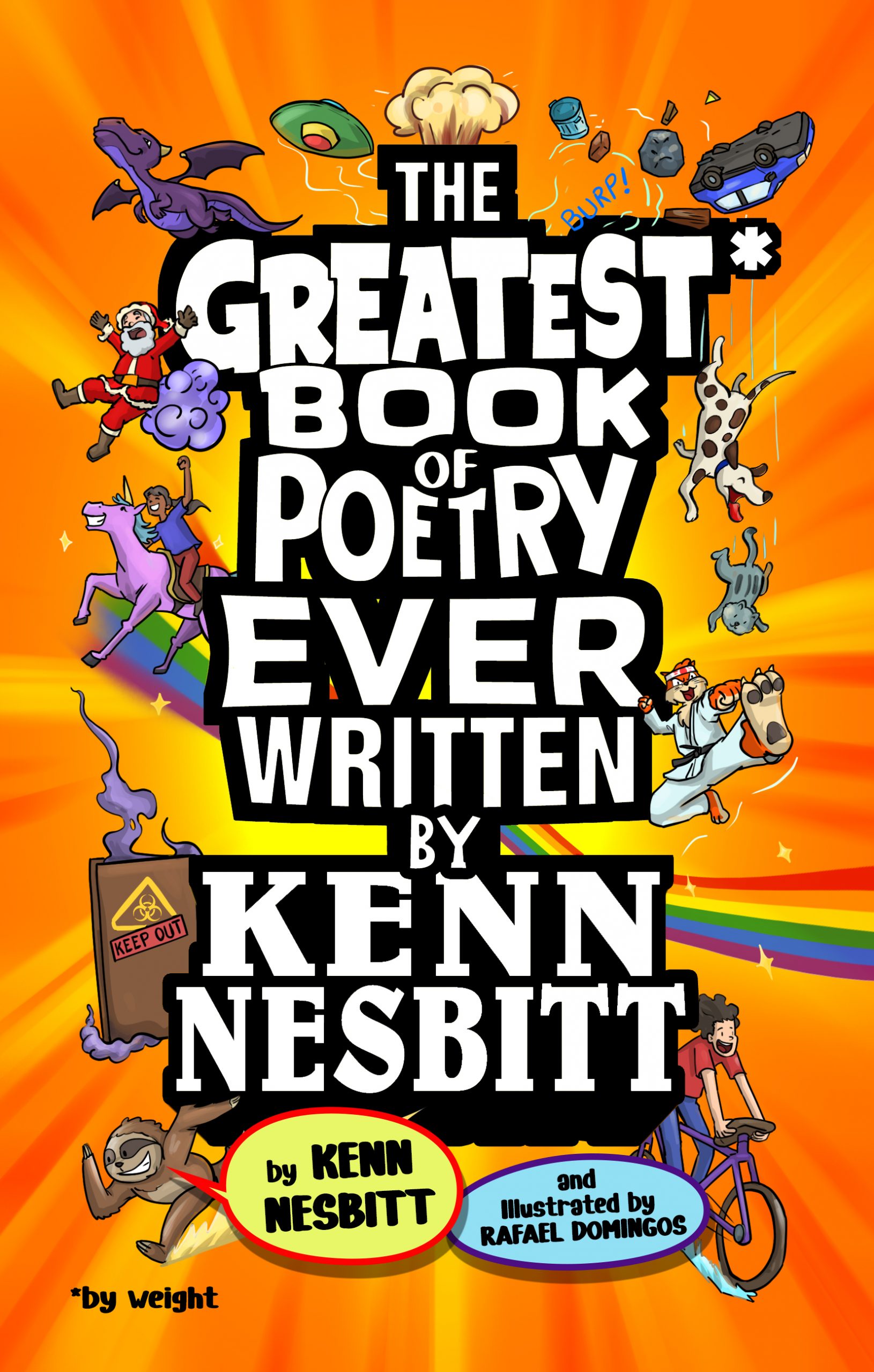
Kenn Nesbitt, former U.S. Children's Poet Laureate, is celebrated for blending humor and heart in his poetry for children. Known for books such as "My Cat Knows Karate" and "Revenge of the Lunch Ladies," he captivates young readers globally.

National Poetry Month: Fun Activities & Challenges for Kids!

April is National Poetry Month! That means it’s time to celebrate the wonderful world of words and rhymes! You probably know that poetry is more than just something you read in class. It’s like a secret code for expressing yourself, playing with language, and discovering new ways to see the world. And guess what? It’s SUPER fun!

Why Poetry Rocks for Kids

Poetry helps you in so many ways! It makes you a better reader because you learn how to understand the rhythm and flow of language. It boosts your imagination, encouraging you to create pictures in your mind with words. Also, writing poetry helps you express your feelings and thoughts in unique and creative ways. Poetry isn’t just about writing long, complicated poems, either. Poems can be short, silly, serious, or anything in between. Think of it like an awesome game you get to play with words.

Splash by Kenn Nesbitt Splash!

Welcome to Poetry4kids. I’m Kenn Nesbitt.

The seasons are changing, and it feels like winter is finally over—but spring hasn’t really started yet. Where my sister lives, people like to say they have only three seasons: summer, winter, and mud. I always thought that was a funny way to describe this in-between time of year, when the snow is melting, the ground is wet and messy, and everything turns to sludge.

So I decided to write a poem celebrating the muddy, splashy, sock-soaking season that comes right before the flowers bloom and the trees start to bud. For kids who love jumping in puddles and getting a little dirty, it might just be the best season of all!

Splash!

The snow is gone.
Outside I dash.
I jump up high
and then I SPLASH!

A spray of sludge
goes everywhere.
It cakes my clothes
and hands and hair.

I stomp around
in mucky ooze.
It soaks my socks.
It fills my shoes.

It’s such an awesome
time of year
before the signs
of spring appear.

Before new leaves
and flowers bud,
we have my favorite season:
MUD!

— Kenn Nesbitt

I Went for a Walk by Kenn Nesbitt I Went for a Walk

Welcome to Poetry4kids. I’m Kenn Nesbitt.

I wanted to write a poem about nature in the springtime, especially for young reader… kids in first grade. Spring is such a fun season to explore the outdoors—you never know what kinds of animals or colors you might see! So I thought it would be fun to create a simple, playful poem that includes both: a list of colorful animals that follow a child home like a parade of pets.

I hope you enjoy the rhythm, the rhyme, and the chance to imagine your own list of colorful animals you might like to have as pets!

I Went for a Walk

I went for a walk
in the woods with my dog.
I found a brown mouse
and a little green frog.
I found a blue bird
and a friendly white rat.
I found a red bug
and a cute orange cat.
They followed me home.
I hope my mom lets
me keep them forever—
my rainbow of pets!

— Kenn Nesbitt

I Tried to Catch a Leprechaun by Kenn Nesbitt I Tried to Catch a Leprechaun

Welcome to Poetry4kids. I’m Kenn Nesbitt

With St. Patrick’s Day coming up, I thought it would be fun to write a poem about the tradition of trying to catch a leprechaun and find his pot of gold. Many kids set leprechaun traps, hoping to outsmart the tricky little creatures. But I started wondering—what if, after all that effort, you didn’t catch a leprechaun at all? What if you ended up catching something much less exciting instead?

That idea made me laugh, so I decided to turn it into this poem. I hope it makes you laugh too—and that if you go searching for leprechauns, you have better luck than the narrator of this poem!

I Tried to Catch a Leprechaun

I went out on St. Patrick’s Day—
a morning wet and cold—
to try to catch a leprechaun
and find his pot of gold.

I saw a rainbow down the street
and just around the bend.
I chased it through the chilly rain
but never found its end.

I hunted for a fairy fort
where leprechauns might be.
I searched through soggy clover fields
and in a hollow tree.

I even built a special trap,
but it was all in vain.
And so, at last, I trudged back home
in frigid wind and rain.

I spent the whole day searching,
but I found no pot of gold.
I never caught that leprechaun.
I only caught a cold.

— Kenn Nesbitt

Celebrate Naomi Shihab Nye

Inspiring Young Poets Through Her Words

Naomi Shihab Nye

Ready for a poetry adventure? Let’s celebrate March 12, the birthday of a truly amazing poet, Naomi Shihab Nye! She’s written tons of wonderful poems and stories, especially for young readers like you. Think of her as a super-powered word-wizard, weaving magic with every line.

She’s not just any poet; she’s held the special title of Young People’s Poet Laureate from 2018 to 2021! That’s like being the official poetry champion for kids, sharing her love of poetry and encouraging kids to find their own voices through writing. It was like having a poet-superhero dedicated to helping young people express themselves!

Why Naomi Shihab Nye is So Special

Mastering Mood: How to Write Poems That Evoke Powerful Emotions

Poetry can be like a magic trick. With just a few words, a poem can make you laugh until your sides hurt, or maybe even feel a little bit scared! That’s the power of mood. Mood is the feeling a poem gives you—the atmosphere it creates. Think of it like the background music in a movie. It sets the stage for everything else.

But how do poets create these moods? It’s all about the words they choose and how they put them together. Let’s explore how you can write poems that evoke different emotions, from happy giggles to spooky goosebumps.

The Building Blocks of Feeling

One of the most important tools for creating mood is word choice. Each word has its own special feeling. “Sunshine” and “rainbow” sound much happier than “storm” and “shadow,” right? When you’re trying to create a certain mood, think carefully about which words will best capture that feeling.

The Magic of Sound in Poetry

Why it Matters and How to Explore It

Unlocking the Magic of Sound in Poetry

Poetry is like a playground for words, and when we think about the sounds words make, it’s like adding a super cool sound system to that playground! Paying attention to the sounds in poetry can make it even more fun and exciting. It’s not just about what the words mean, but also about how they feel to say and hear. Sound is what makes poetry dance and sing.

Why Sound Matters in Children’s Poetry

Think about your favorite song. Is it just the words you like, or the way the music makes you feel? Poetry is similar! Good poetry uses different sounds to create feelings and images in your head. It can be playful, serious, or even a little bit silly. Sound helps to paint the picture the poet is trying to create, adding layers of meaning and emotion that you might not get from just reading the words silently.

Celebrate Guy Wetmore Carryl

Hilarious Poems for Kids (and Adults!)

It’s time to get silly! Let’s celebrate the birthday of Guy Wetmore Carryl, a writer who knew how to tickle a child’s funny bone. Born on March 4th, 1873, Carryl brought a special kind of goofiness to children’s literature. He’s famous for his clever poems and his ability to twist familiar tales into hilarious new shapes. If you haven’t heard of him, imagine a writer who took nursery rhymes, fairy tales, and fables, then added a big dose of playful silliness. That’s Guy Wetmore Carryl!

Why Carryl’s Humor Still Works Today

Guy Wetmore Carryl

What makes Carryl so special, even after all this time? It’s his masterful use of language. He plays with words, creates funny rhymes, and comes up with unexpected twists that kids (and adults!) find utterly delightful. Think about how much fun it is to hear a familiar story told in a brand-new, ridiculous way. Carryl was a master of that! His poems are filled with wordplay, making reading a fun, brain-teasing game. This makes him not only entertaining, but also educational in a sneaky way.

Exploring Carryl’s Poetry: A World of Hilarious Nonsense