A Delightful Field Guide to the Imagination
Every so often, I come across a book that feels like it was made for the exact same reasons I write poems: to spark curiosity, invite laughter, and send readers wandering off into the wilderness of their own imagination. A Catalog of Curious Creatures by Shaun Jex is one of those books.
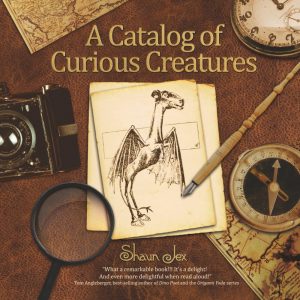
From the moment I opened it, I felt like I’d stumbled onto an old explorer’s notebook, one filled not with dry observations but with lively, lyrical encounters with the strange and the marvelous. Jex frames the collection as a kind of poetic field guide, and it’s a perfect conceit. These aren’t just poems; they’re sightings, warnings, tall tales, and campfire legends brought to life in verse.
The premise is simple and wonderful: each poem introduces a different cryptid or folkloric creature (some familiar, some delightfully obscure) and gives it a voice, a personality, and often a mischievous sense of humor. The result is a collection that feels both cohesive and endlessly surprising. One moment you’re reading about a splinter-throwing troublemaker high in the trees (“The Agropelter”), and the next you’re chuckling at a bird that repeats all the words you probably shouldn’t say out loud (“The Anserback”).
One of the things that makes this collection especially valuable in a classroom setting is how naturally the poems invite discussion about folklore, voice, rhythm, and even creative writing. Many of Jex’s pieces are short enough to analyze in a single sitting, yet rich enough to spark questions and inspire imitation. A great example is “The Dark Watcher,” a creature from early California folklore lore. It blends vivid imagery, and a strong rhythmic pulse, making it perfect for reading aloud and unpacking with students:
The Dark Watcher
SEE IT THERE UPON THE PEAK
WITH WALKING STICK IN HAND
A LEAN AND LANKY SHADOW
GAZING AT THE SUN-BURNED LANDA CAPE ADORNS ITS SHOULDERS
A HAT UPON ITS HEAD
YET THOUGH IT MAY SEEM HUMAN
IT’S SOMETHING ELSE INSTEADIT KEEPS A SILENT VIGIL
AT DUSK AND THROUGH THE DAWN
BUT IF YOU TRY TO GREET IT
YOU’LL QUICKLY FIND IT GONE
This is exactly the kind of poem that encourages students not only to enjoy the story, but to try their own hand at creating a “field guide entry” for an imaginary creature, complete with habits, warnings, and a touch of humor.
What impressed me most is Jex’s range. He moves comfortably between tones—sometimes eerie, sometimes playful, sometimes downright silly—without ever losing his footing. A poem like “The Boo Hag” leans into a haunting, almost hypnotic repetition, while others, like “The Gillygaloo” or “The Fur-Bearing Trout,” revel in absurdity and clever wordplay. It’s a balance that’s not easy to achieve, especially in a collection this large, but Jex handles it with confidence.
And yes, this is a big collection. The table of contents alone is a treasure trove of oddities, featuring dozens of creatures drawn from American folklore and beyond. For young readers, that means there’s always something new waiting just a page or two ahead. For teachers and parents, it means this book has tremendous reread value—you can dip into it again and again and discover a new favorite each time.
The poems themselves are tight, rhythmic, and highly readable. Jex clearly understands how important sound and flow are, especially for kids. Many of these poems beg to be read aloud, and I suspect they’ll shine brightest in exactly that setting, shared between a reader and a delighted group of listeners. There’s a musicality here that keeps things moving, even when the subject matter veers into the strange or slightly spooky.
Another thing I appreciate is how approachable the language is. While the creatures may be bizarre, the poems never feel intimidating. Instead, they invite readers in with clear imagery, strong rhythms, and just enough repetition to make them memorable. That’s no small feat. Writing about unusual topics without losing young readers requires a careful balance, and Jex manages it beautifully.
Visually, the book reinforces its “catalog” concept with a consistent design that feels antique and adventurous. The illustrations, styled like old pen-and-ink sketches, pair perfectly with the poems. They give each creature a sense of history, as though these beings have been documented and passed down through generations of storytellers. It’s a clever touch that adds another layer of immersion.
One of the things I found especially enjoyable is the way Jex plays with perspective. Some poems feel like warnings (“Don’t go hunting the great Gumberoo”), others like firsthand accounts, and still others like bits of local lore shared by someone who swears it’s all true. That variety keeps the collection lively and helps each poem feel like its own little world.
There’s also a nice thread of humor running throughout the book. Even when the creatures are described as dangerous or unsettling, there’s often a twist or a wink that softens the edges. Kids will laugh at the idea of square eggs rolling nowhere, fish that bounce, or creatures that behave in ways that are just plain ridiculous. That humor is what makes the book not just intriguing, but genuinely fun.
If I had to sum it up, I’d say this: A Catalog of Curious Creatures captures the spirit of storytelling, the kind that happens around campfires, in classrooms, or at bedtime when someone says, “Let me tell you about something strange…” It encourages kids to imagine, to wonder, and maybe even to invent a few creatures of their own.
And that, to me, is the highest compliment I can give a book like this. It doesn’t just entertain; it inspires.
If you’re looking for a poetry collection that blends folklore, humor, and imagination into something truly engaging, Shaun Jex has created a delightful addition to the shelf. I have a feeling young readers—and the grown-ups who read with them—are going to have a lot of fun exploring this curious catalog.

- I Think I’d Like to Get a Pet - September 22, 2026
- Summer and Autumn - September 21, 2026
- Weekly Children’s Poetry Roundup – Saturday, September 19, 2026 - September 19, 2026